


02 Nov Pass The Salt
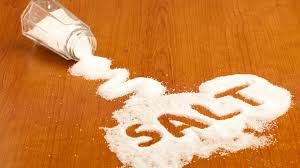
Ok, I am going to jump right into it. Matthew 5:13 tells us we are the salt of the earth: You are the salt of the earth, but if salt has lost its taste, how shall its saltiness be restored? It is no longer good for anything except to be thrown out and trampled under people’s feet.
How does one lose saltiness? Is it possible us leaders can lose our saltiness? One way I believe we can is due to lack of accountability! As Small-group leaders we are held to a higher standard of accountability.
As Small-group leaders we are heeding the call Christ has placed on our lives and taking on the responsibility of leading a small portion of His flock. The Bible says that preachers will be judged more harshly on the Day of Judgment. This also applies to Small-group leaders. Ephesians 4:11 says “And he gave some apostles, and some as prophets, and some as evangelists, and some as pastors and teacher”. A pastor/preacher and a teacher is a shepherd of God’s flock who is to instruct, teach, and protect the people under their charge. Now, though we are considered facilitators and not necessarily teachers, we are still caring for God’s people He has placed in our care.
We should be mature and not fall under the rebuke as those in – Hebrews 5:11-14: About this we have much to say, and it is hard to explain, since you have become dull of hearing. 12 For though by this time you ought to be teachers, you need someone to teach you again the basic principles of the oracles of God. You need milk, not solid food, 13 for everyone who lives on milk is unskilled in the word of righteousness, since he is a child solid food is for the mature, for those who have their powers of discernment trained by constant practice to distinguish good from evil.
Small group leadership is not something we should accept in a cavalier manner, without much prayerful consideration and reverence for the position. James 3:1: Not many of you should become teachers, my brothers, for you know that we who teach will be judged with greater strictness. Paul’s advice was simple on how leaders can learn to be Christ-like. Philippians 3:17: Brothers, join in imitating me, and keep your eyes on those who walk according to the example you have in us.
If we then, as leaders, are shepherding a small piece of the flock shouldn’t we be careful in everything we do, say and think? How do we expect others to follow our example if we are not following the example set by Christ? How do we tell someone to get baptized when we are not baptized? How do we tell someone not to give the appearance of evil when we are giving the appearance of evil? How do we tell someone to tithe, when we don’t tithe? Serve, when we don’t serve? How do we evangelize those that are lost if we are no longer salty?
Just a side note on the ‘appearance’ thing: Social media can give a lot of ‘appearances’ to those that are watching. Look at it this way; as Christians and as Christian leaders we are in a fish bowl. Everyone on the outside is looking in at what our next move is, our peers as well as those under our care. We need to be careful to avoid the appearance of evil as not to cause someone to stumble. Maybe what we do just looks bad but is harmless. To someone else, who is struggling with something, may think ‘well if she/he can, then I am ok’ (see 1 Thessalonians 5:12-22 and Romans 14:13-23).
Which brings me to why leaders are asked to sign a ‘code of ethics’. The answer is clear. Small-group leadership is an important role, it is important to God, it should be important to us! We need to be diligent on how we conduct ourselves privately and publicly. We are accountable for our actions and thoughts.
So, my fellow Small-Group leaders, let us be careful not lose our taste, but pass the salt.

No Comments